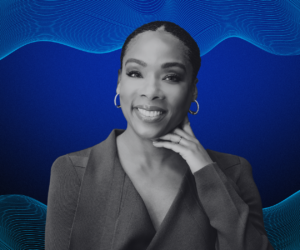
Margaret Kerrison: The 4 Elements of Transformative Experience, Revisited
Available wherever you listen to your podcasts:




About
We’re revisiting our conversation with writer and immersive storyteller, Margaret Kerrison, an episode first recorded following the launch of the ambitious Star Wars: Galactic Starcruiser experience at Disney World in Florida. As a key architect of its narrative and characters, Margaret offers a behind-the-scenes look at what it takes to create immersive story worlds. We explore the craft of writing for immersive experiences, and how it demands a distinctive creative approach — one rooted in world-building, collaboration, and audience agency.
Additional Links
- To get your copy of The Future of Storytelling, click here.
Transcript
CHARLIE MELCHER:
Hi, I’m Charlie Melcher, founder of the Future of StoryTelling. Welcome to the FoST podcast. Today we’re re-releasing my conversation with writer and immersive storyteller, Margaret Kerrison. We first shared this episode in 2022 just after I had the great fortune to participate in the ambitious Star Wars: Galactic Starcruiser live-action role playing experience at Disney World in Florida. Margaret played a key role in that project, shaping its narratives and character development. In this conversation, we explore the craft of writing for immersive experiences and how it differs from more traditional linear forms. Margaret is a true expert in this field — she spent years at Disney Imagineering, led narrative strategy at Airbnb, and has authored several books on immersive storytelling, including her 2025 release, The Art of Immersive Storytelling: Strategies from the Gaming World. Margaret and I share the belief that stories have a greater potential to be transformative when they move beyond the confines of the page and screen. Her insights remind us that immersive storytelling demands a distinct creative approach when grounded in world building, collaboration, and designing for audience agency. Please enjoy this episode with Margaret Kerrison.
Margaret, welcome to the Future of StoryTelling Podcast.
MARGARET KERRISON:
Thank you, Charlie. It’s really great to be here.
CHARLIE MELCHER:
So I should start by confessing that I’ve just recently come back from the Star Wars: Galactic Starcruiser experience, so I just want to say congratulations for your role as part of all of that.
MARGARET KERRISON:
Well, thank you so much, first of all, and it took a lot of various people and the whole team to really put that really epic awesome project together. So it was something that was so new and experimental and we had no idea how the audience and the fans are going to receive it. But first and foremost, I’m just so proud of the team for pulling it off because it really took literally a whole village to do it. So it’s really the little Starcruiser that could.
CHARLIE MELCHER:
Originally, the conceit is to create rides, but if you certainly look at Galaxy’s Edge, you created a world.
MARGARET KERRISON:
Yeah, the story of how I joined Star Wars Galaxy’s Edge was they needed a writer initially to write the stories for all of the restaurants and all the retail. And in the first week that I was brought into the team, as I was listening to all of the ideas for the attractions, the rides and everything, the entertainment, I said, this sounds like we’re building a world that should speak and connect to each other. They should really speak to one another and really be integrated in a way that we’ve never seen before. And that includes everything from training the cast members to acknowledge each other, the guests, the characters that walk around having backstories, having culture and lore and history to the planet itself. All of these things speak to why certain things are there and why certain characters are there.
CHARLIE MELCHER:
Well, you really immediately feel, I felt, was that I was in a foreign city, that I had literally gone to a place that was a real place. Everything was made as authentically, as permanently, as you would imagine, an old Italian village or something. And everything had a kind of patina of age to it and a kind of history weathered into it that made it so believable.
MARGARET KERRISON:
Yeah, I love that you said that because that’s exactly what we drew from was our inspirations traveling, because from the moment that you arrive to a different country, whether by plane, by boat, by car, immediately, immediately you feel this shift in culture, in climate, in language, in traditions, in everything that you see and experience around you. And that’s exactly what we want our guests, our travelers, and our passengers to feel when they walk into this space, is that they are transported into this other worldly location that belongs in the context of this universe.
CHARLIE MELCHER:
So let me ask, I mean, it’s massive, right? I happen to know it’s 14 acres. It’s such an elaborate project. What sort of team was involved? Give us a sense of literally the different disciplines that came together to build that.
MARGARET KERRISON:
Oh my goodness. I mean, we have over 140 disciplines at Walt Disney Imagineering, and oh my gosh, I still say we, even though I’m not at Imagineering anymore, but over 140 plus disciplines. So every single discipline has a hand in building any of the attractions and the worlds that Imagineering builds everyone from creative directors to the producers, to some concept designers, to engineers. One of the main things that we started off with was a bucket list of all the things that you wanted to do in a Star Wars plan, everything from building a droid to building your own lightsaber to of course, riding and perhaps piloting the Millennium Falcon to being in the epic battle between the good and the bad, right, dark side versus light side, and trying to find ways in which we can put our guests in the middle of that action. That was something that involved so many disciplines coming together and realizing what that could mean.
CHARLIE MELCHER:
And it sounds like, I mean, you have this role as a writer to traditionally, that’s to literally create the narrative, right, to hit all the beats and to be in control of that story and to build out the characters. But it’s quite different when you’re writing for immersive. Tell me a little bit about how you approach that differently when you’re creating a immersive story world as opposed to a traditional linear narrative.
MARGARET KERRISON:
Yeah, it is the big question, Charlie, because they always say that the writer is king. In the TV world, you start with a script, and same thing goes for films as well, right? You start with the script, and that’s not the case for immersive storytelling. Sometimes it starts with an idea. Sometimes it’s starts with a cool vehicle that the ride engineers dreamt up of that came up with, and they show it to the rest of the team and say, “Hey, we have a really cool technology, we have a really cool ride. What can we do with it?” And then they would bring in the writers and perhaps an illustrator, concept designers, creative directors, to think about, okay, well, what is the wish fulfillment of this feeling in a ride? It makes me feel like I’m flying. What can we use to make us feel like we’re flying? And if a ride feels bumpy, how can we use that bumpy ride to tell one of our stories? Looking at all of the various stories within the Disney archives in the library. So it can come from anywhere. It can come from a really cool technology, it can come from the writer as well, but it’s not — I think the role of the writer in immersive storytelling, in themed entertainment is one of a story champion, the advocate, the one who has the responsibility to take the story and translate it into the various disciplines.
CHARLIE MELCHER:
Margaret, you did a beautiful job with your book, Immersive Storytelling for Real and Imagined Worlds. I’ve so enjoyed reading it, and I feel like in there you have answered the question that I’ve put to you, which is basically how do you write for immersive storytelling? This is a book, as I can tell. I know you don’t really sell it as a how-to, but it is as close as I’ve come to seeing a how to for building immersive stories. And from the perspective of a writer, from your perspective, it does answer, I think, very beautifully or very articulately how one goes about writing for immersive experience. One of the things I thought was so on point, if you will, profound, was just your emphasis about creating transformation in the audience, not just being aware of their experience, but trying to create a kind of experience that would leave them transformed different after it. How do you think about accomplishing that as a writer?
MARGARET KERRISON:
So when I think about how we create change in our audience, there’s four ways really to increase the likelihood to feel moved and transform. The first one I say is truth. To tell an emotional story that embraces universal truths. And I think many storytellers understand this, especially writers, that no matter who you are, where you’re from, there’s going to be some things that we can all relate to these stories that we’re telling. We understand what love is, what it means to be jealous, to be fearful, to be envious, and how do you really draw in to that universal truth, that core, universal truth that everyone can easily understand. The second one I say is to make it personal. I always think back to the James Joyce quote, when an interviewer had asked him, “Why do you always write about Dublin?” And he said, and I paraphrase, he says, in the particular is contained the universal, because Dublin is what he knows.
And this is something that I try to think about in every single story and project that I work on. How do you make something personal to everyone else? Maybe a different country, a different context, whatever it is, the different culture. But how do you create something that makes people feel like this is my story, and I use the example of a personal story of something that happens in your family or someone across the street. Your neighbor is going to be a lot more meaningful to you than something that happens to someone from across the world. So that’s what I mean when I say personal, which brings me to the third idea, which is the status quo, which is meeting your audience where they are. When you think about the linear, traditional way of storytelling, you meet a character in their status quo. You understand where they are in that point in their lives, and you journey with them from the status quo of their ordinary world into the extraordinary world, they’re making that big leap that change into the unknown world.
Star Wars: Galactic Starcruiser is a perfect example, is that everyone who arrives in that terminal are all coming from the same home planet, and they’re going to go be transported into the Starcruiser together. It doesn’t matter who you are, we’re telling you that you’re starting out as travelers going into a star cruiser, and you’re going to go on this voyage no matter what your affiliation or fandom or knowledge of Star Wars, it does not matter. Your status quo is that you’re traveling to a different planet, to a different country, if you will. So what you’re going to experience likens to that. And finally, when I think about the fourth, this is something that’s extremely important and something that a lot of immersive storytelling, there’s a missed opportunity in this, which is community, where we can create a world where visitors can connect with each other.
And this is something that’s so important because if you think about the traditional formats of theme parks and rides and all of this, you get on a ride, you have a great time, you get off, you leave, and that’s that, right? But how can you think about experiencing something together? Because a lot of magic comes in interacting with strangers, with people that you don’t know, with people that you have assumptions about. And having those biases broken down because of those personal interactions and connections that you make, you’re creating a community in the context of that world. And so that’s something that I think a lot of us creators and storytellers in this industry really should lean on because it’s something that deep inside all of us want. And when we come to any attraction or experience, we’re looking for that. We’re looking for that sense of belonging that way for us to take away a bit of the loneliness that we all have. It doesn’t matter who you are, and trying to find ways to connect with people in meaningful ways, and what better way than to connect with people who are like-minded, who have the same interests as you? And so in thinking about this, it’s really an interesting social experiment of sorts to think about how you can find those opportunities for people to connect with each other so that they can feel like they’re a community, even if it is something that is created.
CHARLIE MELCHER:
When you talk in the book about good writing for immersive experience, it does feel that one of the lessons is to be able to pull details from the real world, right? Because at the core, we’re creating real experiences that we’re going to sense through our bodies, through our senses, and being able to draw that kind of rich source material of life. Does it ever feel to you sort of ironic that we’re creating fake worlds for people to have real experiences in based on real world learnings as opposed to just sending people out into the real world? I had that flash reading the book, maybe we should just not be doing this and sending people on hiking trips in the forest or mountain climbing or river rafting.
MARGARET KERRISON:
Yeah, it’s a really good question because I remember when I first started at Disney Imagineering, my husband is not a theme park fan, and at the time I converted him, and I think that it was, I remember when I first got the job and I was talking about it in a social setting with some friends, and I said, yeah, I’m going to work for Disney Imagineering now, and I’m going to build theme parks. And my husband had said, I’d rather go to a national park. And so a lot of that, I think I love going out in nature. I love doing all of the things that doesn’t come curated or designed, but I think there’s a group of people, and there’s also a time and a place where you want to feel these heightened emotions where you don’t have to really think about what should I do or how should I feel, or any of those things.
For some, it might be a way for them to have a place that they can feel like they can be more of themselves than the real world. When you see cosplay and the people who dress up in all these costumes and really embracing their nature, their inner nature, and really wanting to express it in different ways, when you’re out in the real world and you’re kayaking and hiking, there is no socially acceptable place for you to pretend that you’re a Jedi or play that you’re a princess, but where’s the places for play that I can engage in a way where everyone else is playing so that I don’t feel like I’m a weirdo? And I think that that’s something that when thinking about creating experiences that draw on from the real world, what’s real when the feelings and the emotions that you’re feeling in this fictionalized worlds are real, the joy that you have with the family and friends going on an experience — that to me is what the value is of all of these created imagined worlds. The feelings are real. You can’t fake that. So having that opportunity to do it is key.
CHARLIE MELCHER:
I mean, I certainly can tell you one of the highlights of that experience for me of Galactic Starcruiser was the lightsaber training. And to be able to be blocking laser blasts and feeling them hit my lightsaber and being able to wield that weapon in all of these physical positions and get haptic response, I mean, it was transformative. I mean, honestly, I could have spent the whole day in that one experience. We were there for 15 minutes or 20 minutes or something, and I literally would have been happy to spend hours training as a Jedi.
MARGARET KERRISON:
That’s amazing to hear. I think that that’s something that the team worked on for so long. I mean, in terms of how to get it right, because that above all else, is going to be the one that holds so much weight in terms of how you experience Star Wars and how you can feel like the heroes before you. We also talked a lot about it not just being physical, that it had to feel spiritual almost as well, because this was such a huge wish fulfillment. And that’s a really great example of someone having the wish fulfillment of wielding a lightsaber, doing the action and walking away believing a little bit more that they are a true Jedi or a Sith Lord.
CHARLIE MELCHER:
That was a beautifully produced experience. I mean, everything about it worked. The conceit that we’re there learning some defensive moves as we’re taking a training that you were able to block them. The lightsaber color changes, and if you absorb the blast in the haptic response as you’re holding the lightsaber, and then after you’ve learned to do that, now we’re being told that we can kind of block blasts with the force that we know where they might be coming. And so you do take it to this next kind of spiritual level. And I think as wish fulfillment, I think we all sort of dream that even though we operate as poor farmer boys, that we might actually be a Jedi, that the force might be strong in us, and that someday we might be called upon to save the galaxy and be capable of it. And that scene – I shouldn’t say scene, because it was an experience – that experience left me feeling that way.
MARGARET KERRISON:
I remember one of the early tests play tests of this experience. I had made a comment that I really want to feel like I am the chosen one. And in this moment where it’s a very small and intimate group, we were able to achieve that because it’s this feeling of that you’re part of this exclusive group of people that have this chance to feel the force. And being able to do that in a way where you’re surrounded by others who want to have that same wish fulfillment. There’s an energy and there’s a truth in that that is so palpable because you’re among your kind. You’re among the people that have come to do this thing together. All of those things that we talked about. Is it personal? What’s the status quo? Do you feel like you have the community? What’s the truth? All of those elements, I believe are captured in an experience like that where you feel like you are truly special, that you are seen, that you have the special ability to do the thing that you’ve always wanted to do. And especially seeing adults and kids alike, sharing that same dream is amazing, is absolutely amazing.
CHARLIE MELCHER:
I enjoyed learning in the book several things about how Imagineers think about designing. Imagineers use a term “plusing” — what does that mean when you plus something?
MARGARET KERRISON:
Yeah, A lot of what we did and still do at Imagineering is that you want to plus an experience, and plusing means to add something that’s very compelling to it. It’s a form of “yes and.” And if you are familiar with improv, and that’s something that we did a lot at Imagineering too, is if someone has an idea, how do you make it better? And it’s a question of “what if” and “why not”? We’re always trying to find ways to, plus an experience and plusing is a way for us to consider. That’s a great idea, but what if we did this other thing? Once you have a group of creative people together in a room throwing out ideas and plusing the experience, it’s endless the number and the amount of possibilities that can come out of it. And I think that that’s something anyone can learn and take away no matter what you do.
And no matter what industry you’re in, how do you think about plusing or, ye and-ing someone else’s idea? Because there’s no better feeling when you throw out an idea in a room and someone says, yes, and we can do this to make it better, to make it more amazing. And everyone has that ownership of that idea. It’s not just about, oh, whose idea is it? Where did it come from? Who thought up of that? No, there is none of that at Imagineering and also in many creative places because it is a collective effort. And even when I wrote this book, and I really didn’t want to call it a textbook or a how to guide, even though it eventually became something like it, because really it is a collective wisdom that I learned and I guess interpreted from other people in what made sense to me, and maybe what makes sense to me might not make sense to others, but it’s part of your journey as a creative and as a storyteller to take all those various nuggets of wisdom wherever you learn it and find your own way. And that’s something that I wanted to encourage is that this isn’t the only way, and I hope it’s not the only way. Go out there, learn, fail, experiment, and explore and try to find all these different ways to tell your story in other mediums that may have not been done before. And in thinking about that, how do you create something that’s truly one of a kind?
CHARLIE MELCHER:
Well, I certainly had the thought as I was reading through it that not everybody has the budgets that Disney has. Not everyone has 140 departments at their fingertips to collaborate with and five years to work on something and to go research things by going to Europe or wherever, and what suggestions might you have to mere mortals working on small teams with totally insufficient budgets to try to pull off great immersive experiences?
MARGARET KERRISON:
I have to say, when I think about the definition of immersive storytelling, it’s using what’s available to you, right? The tools, the techniques that you know and the materials that you have, the environment that you have. I mean, I always think back to the very first time I try to create my own immersive storytelling experiences is when I tried to recreate a haunted house in my cousin’s bedroom, and I used us as the characters that you would encounter along the way. We used curtains and chairs, rolling chairs, and whatever makeup we had from our mother’s vanities, and really trying to find something that would scare our friends when they walk through that experience. So it doesn’t require fireworks, it doesn’t require a 20 foot drop or any of those things in order for you to feel and to be transformed by an experience.
CHARLIE MELCHER:
I’d love to learn a little more about your background and how you got into being a writer for immersive experience.
MARGARET KERRISON:
Yeah. I think that every time I think about how I got my start into writing, I have to really go back to my childhood because I think that growing up, I was born in Indonesia and I grew up in Singapore. I lived there for 15 years where I attended an American school. And being exposed to all kinds of different stories and different cultures really imprinted me and shaped me in terms of thinking of how I can look at stories through different perspectives. And so when I looked into this world of themed entertainment, that was it for me. A whole door opened and it was a whole new world that I stepped into and never looked back ever since. I discovered this whole way of telling stories in more than just the screen. In more than just the pages. And thinking about different mediums and formats involving all the senses.
CHARLIE MELCHER:
How has your personal experience really impacted the type of storytelling that you do?
MARGARET KERRISON:
Whoa. Everything that I do, I always have to bring in all of myself, which means it is really all or nothing for me, which is quite exhausting actually, in any project that I’m on. I feel like as a woman, as an immigrant, as a mother, as someone who was never really able to tick that box of where I’m from and what race I am and all of those things, I never really had a box to tick. And I think that’s okay. I think in my personal experience of being multicultural and having been exposed to different people and cultures and education, academic systems, I feel like it creates a more interesting and unique perspective of the world that I think a lot of people may not have experienced. I’ve been able to explore different avenues and paths in my life that may not have been afforded to me if I didn’t have the background that I did growing up. The traumas of the past, your childhood and all of the things, your past experiences, I think is extremely important for a writer, any writer to face. And I think that that’s something that you have to do. It’s something that you want to tackle because no one else will experience that same story. Only you, and how can you share that story in a way that is extremely personal, but one that other people can identify and resonate with.
CHARLIE MELCHER:
Well, really appreciate your sharing with us today on the podcast, and look forward to seeing your superpowers in action in lots of other places.
MARGARET KERRISON:
Well, thank you so much, Charlie, for having me, and we definitely have to do an experience together.
CHARLIE MELCHER:
Look forward to it. Look forward to many. Thank you, Margaret.
MARGARET KERRISON:
Yes, thank you.
CHARLIE MELCHER:
Once again, I’m Charlie Melcher, and this has been the FoST Podcast. Thank you for listening. If you enjoyed the episode, I hope you’ll subscribe and tell a friend. Your personal reference and endorsement means the world to us. The FoST Podcast is produced by Melcher Media in collaboration with our talented production partners, Charts & Leisure. I hope to see you again soon for another deep dive into the world of storytelling. Until then, please be safe, stay strong, and story on.