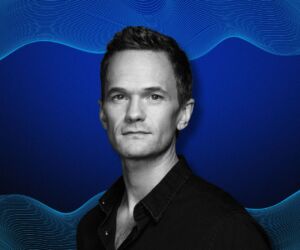
David Rockwell: The Anatomy of a Welcoming Space
Available wherever you listen to your podcasts:




About
David Rockwell is the founder and president of Rockwell Group, the acclaimed architecture and design firm helping shape how we experience space, food, theater, and culture. Whether it’s redefining modern luxury dining through the design of the Nobu restaurants, or creating signature work in boutique hospitality through the W Hotels, David is a visionary for architects and storytellers across the board. In the theater realm, David has designed Broadway sets for hit shows including Hairspray and She Loves Me, winning him a Tony Award amongst several nominations in scenic design.
In this episode, David joins Charlie Melcher to explore the intersection of architecture, theater, hospitality, and storytelling. He discusses how an early love of community theater shaped his approach to design, why uncertainty is essential to the creative process, and how his team searches for the “emotional DNA” at the heart of every project.
The conversation features a live Q&A with members of the FoST Explorers Club.
Additional Links
-
- Learn more about Rockwell Group here.
Transcript
CHARLIE MELCHER:
Hi, I’m Charlie Melcher, your host for the Future of StoryTelling Podcast. Welcome. Our guest today is David Rockwell, founder and president of the Rockwell Group, a 350 person cross-disciplinary architecture and design firm based in New York City. I’m especially excited to talk with David, not only because he’s an extraordinarily talented and accomplished designer, but because he brings incredible thoughtfulness and generosity to his work and community. He has a deep belief in the power of design and storytelling to make our lives better. As the visionary behind Rockwell Group, David has shaped how we experience spaces, food, theater, and culture. He’s perhaps best known for redefining modern luxury dining through his design of the renowned Nobu restaurants and for his signature work in boutique hospitality through the W Hotels. David has also designed Broadway sets for hit shows, including Hairspray and She Loves Me. In addition to winning a Tony Award amongst several nominations for scenic design, he’s received two Emmy Awards, was inducted into the James Beard Foundation’s Who’s Who of Food and Beverage in America, and was included in Architectural Digest’s AD 100 Hall of Fame.
The Rockwell Group has also been named by Fast Company as one of the world’s 50 most innovative companies. In this episode, we talk about his path to architecture and what it means to have a design practice rooted in storytelling. We also recorded a live Q&A with members of our FoST Explorers Club community. Stay tuned to hear their questions and the lessons David has to share with us. With that, I hope you enjoy this conversation with David Rockwell.
David, welcome to the Future of StoryTelling Podcast. So nice to have you here.
DAVID ROCKWELL:
Nice to be here. Thanks for having me.
CHARLIE MELCHER:
So I thought we might start by going back to the beginning. Tell me a little bit about your background, your upbringing, and how that brought you to become the renowned architect that you are today.
DAVID ROCKWELL:
So I came from a large family, five boys. I was the youngest. We moved around a lot. My dad passed away when I was three. My mom who had been a dancer in vaudeville remarried. And I think that shared experience is something that space and design and sort of craft can really impact. So the way that expressed itself in my case is we moved to New Jersey and my mom started a community theater there and everyone in my family was a part of it in this sleepy, beautiful suburb with big giant houses. I wasn’t interested in the big giant houses. I was interested in the way this opportunity for people to collaborate and that it kind of electrified and brought people together, created this kind of magic, this momentary magic that marked a moment. So that was the very earliest moments. I went back to that Jersey Shore Theater, which was really our little school auditorium with my daughter a few years ago.
She’s now 24, and it was so teeny. It was so small, and it was just a reinforcement on those memories that are so charged.
CHARLIE MELCHER:
So from community theater and your mother doing dance and choreography, you found your way to becoming an architect. Was that a natural path? I mean, you could have gone into lots of things. I’m just curious what made you decide to design buildings?
DAVID ROCKWELL:
I would describe it as a very fortunate, lucky guest to go into architecture. One of the things that influenced that was when I was 12, my mom, my stepdad, and my brother and I, without much explanation why, we packed up the station wagon and drove to Guadalajara, Mexico. It was a chance, first of all, to explore something totally new and to see a place that was incredibly theatrical, but not about theater. It was a city full of marketplaces and bull rings and mariachis. And so I became fascinated with Mexican culture, Mexican sense of color. I went to Syracuse University our first week in a five-year bachelor’s of architecture program. I heard Buckminster Fuller speak at Hendricks Chapel, and I’m being generous when I say I understood every fourth word. We had all of these experiences that were so charged and terrifying. I went to my first year design professor who had assigned a class where we had to go out on campus and draw something.
Then I had taken off one of my Mexican sandals and drew like a still life near the tree. And I looked over to my right and this kid, Jeff Hill, was drawing an MC Escher version of the entire campus. So I went to Siegfried Snyder, my basic design professor, almost in tears, and I said, “I think I may have made a mistake. I can’t draw like that.” And he said, “Well, maybe you have a little less to unlearn than other people, but stick with it for a year and see how you do.” And it worked out, but it was a hunch.
CHARLIE MELCHER:
It’s funny. I have some similar experiences of being in college as an undergraduate and feeling completely unworthy, feeling like everybody else was so creative and talented. And it’s funny how those can be so motivating as emotions and that insecurity can lead to great things.
DAVID ROCKWELL:
I totally agree with that. And I think it’s one of the things I’ve come to understand in my studio here is giving people permission to engage with that sense of uncertainty. There’s a lot of potential in uncertainty. And in fact, by and large, I don’t want to take a project where I know the answer before we begin. I think that uncertainty can be life-giving.
CHARLIE MELCHER:
You mentioned not wanting to take on a project without having uncertainty. How do you start a project?
DAVID ROCKWELL:
Well, we start out with lots and lots of research. We’ll want to know a lot about the history of a place. We’ll do 18 to 20 big boards of research looking at who the client is, who the expected audience is, what is the sequence of spaces, what is the intended result, who are your partners? If it’s a restaurant, we taste the food, we interview the chef and understand the history of the chef, we research the location, the history of the location. What’s interesting is none of that linearly leads to a solution. You can do all of that, but at some point you have to just conjure something. And I think that’s based on having a lifetime of interests and passions and looking around and constantly keeping your mind engaged and thinking through what I would define as the DNA of a project. Ultimately, it’s some version of an emotional narrative.
And I know narrative is something that means a lot to a lot of people and storytelling means a lot. In our case, we try and find some emotional DNA that will link to the service in a hospital or the ethos of the doctors or the cuisine of the chef so that the design grows out of some observation of what’s going to make it special.
CHARLIE MELCHER:
Can I just say that we operate exactly the same way as that research and then we try to get to a foundational narrative which is based in some sort of emotional truth about the project. When I say we, it’s because we’re creating stories and experiences, but so are you. Would you agree that you’re doing the same?
DAVID ROCKWELL:
In our case, in many cases, we’re creating the armature for the stories and the armature for the memories. But yes, I totally agree. And I think that something like Nobu, for instance, what an amazing gift to be able to create a place that tells a story over 30 or 40 chapters now and have that evolution or working with a director in theater and you’re doing multiple projects over time, you really become adept at trying to help them tell the stories and always with the idea that there is an emotional journey, that there is some payoff.
CHARLIE MELCHER:
And when you say journey, I’ve heard you talk about design as a kind of choreography. Are you talking about the journey of a guest moving through the spaces? What do you mean when you say journey or choreography?
DAVID ROCKWELL:
Well, let me use a couple of examples if I can. So in theater, when I was designing Hairspray, I had a really, really important lesson in storytelling. I got to know the amazing world of John Waters. I went to Baltimore and had John Waters give us a tour. I met Jack O’Brien, the director for the first time, and we had so much research around late ’60s optimism, what that world was like, what it looked like, what the toys were like at that period. Light Bright had just come out in 1967, so that was an important part of the design. But the lesson in storytelling was my first meeting with Jack O’Brien and Jerry Mitchell, the choreographer, where I’d filled a giant room with lots of boards that had many design solutions for lots of the show. And as a director, I don’t think he was used to that kind of full on assault from a designer.
And at the same time, he was seduced by it, but we had to figure out what were we going to do? And he put his arm around me and he said, “Let’s take everything out of the room except those things that make you believe in and fall in love with Tracy Turnblad, and let’s start with that.”
CHARLIE MELCHER:
Wow.
DAVID ROCKWELL:
And when I discovered that entrances and exits and transformation were one of the key languages that directors were looking for help on, how do you go from one place to another? How do you welcome people? That’s what I mean by journey in theater. In architecture, in many cases, I mean the literal journey of what does the door say? How do you enter? What’s the sequence of spaces that in a big space maybe has a series of human scale transitions? And also in each case, what are the things that become memorable? What are the factors of a memory that you take away many years later? And a lot of that I think it sings design can contribute to.
CHARLIE MELCHER:
It’s easy to say there’s a narrative, but you’re building a physical permanent structure. How is that translation from narrative to atoms?
DAVID ROCKWELL:
Well, part of it is you recognize that you’re creating a place for people to have an experience that is a layered experience where music, sound, you’re taking all of those things into account. If it’s educational building, an institutional building like the Hopkins Bloomberg Center in DC where the foundational emotional story is, students want to be in person. How do we create a place that is like a magnet for people? So in that case, the physical manifestation of it is you take those spaces that are a series of lounges where you’re taking a big room and breaking it into definable blocks where you can imagine I’m going to be in this space and you use that as the building block. Then you start to say, well, it’s in DC, the campus is in Baltimore. What do we take from Baltimore that we bring here? There’s something called the beach, which is a big grass area where students meet.
How do we bring that in to DC? Well, we did it with this tiered seating that creates a destination that’s reminiscent to that setup. And then every material choice is based on those series of things.
CHARLIE MELCHER:
I can’t help but keep feeling that you are really actually an immersive experience designer. You are very consciously thinking about how you are impacting, changing the people who are going to be in those spaces. Can architecture be transformative for the behavior of the occupants that you’re designing for?
DAVID ROCKWELL:
Yes, I think it can be. I think what it can’t be is predictive and controlling about that. I think in some ways, much like complicated immersive experiences, there’s many outcomes, there’s many paths you can take through it. We’re creating places where people will have deep memories, will feel more fully engaged. I’m sure you in some ways had to have looked at it this way, but during COVID, I was editing a book called Drama that was a look at how theater and architecture are similar. And I, of course, looked out to the city and I said, “Well, there’s no better example than an empty city is the same as an empty theater. It’s inert without the life force.” So I’m interested in buildings where that life force is augmented and adds to it, but it’s not a predictive one way in, one way out system. In 2008, we were asked to do a pavilion at the Venice Biennale, and I was looking for a technology consultant who could help me figure out how to use technology to bring people together, not to separate people.
So we’re not dominated by screens, but technology is a unifying force. And that led to us creating the lab at Rockwell Group, which is about a 25 person skunkworks team. And it got me very interested in thinking about how immersive experiences can be such a powerful thing, and we continue to research that, which is why I found reading your book on that such an incredible look at all the different permutations of that because it’s not one thing, of course, it’s many different things.
CHARLIE MELCHER:
Well, first, I want to pass the compliment back. I very much enjoyed reading Drama. Thank you for sharing that with me. It sparked a lot of these questions, obviously, for today. Also, want to remind you and thank you for the visit that FoST made to your lab years ago, exploring different studios in the city. We had what we called a story crawl, and we were very fortunate to be welcomed to your offices and to experience some of the very innovative work coming out of your lab. And again, not a normal thing for an architectural firm, at least in my experience.
DAVID ROCKWELL:
I have to go back to say this because I left it out just in terms of story because you remind me how important it is to our work. But when I got to architecture school, I held onto my belief in storytelling to the point where if it was a figure ground project, for those who aren’t familiar with that, you might be just creating a composition of white forms that is just an abstract, beautiful design. I would write a backstory about who are the two families that lived there and why they wanted that. And I remember professors saying, “You don’t really need to do that. That’s not what this is about.” And I said, “Well, it’s what it’s about for me. It’s my way in.”
CHARLIE MELCHER:
I guess I should ask this sort of high level question. From all of your experience as an architect, as a set designer for theater, what have you learned that you think would be useful for storytellers? What have you learned about building, about materiality, about persistence or any of these areas? Where are there some lessons from your space for our community of storytellers?
DAVID ROCKWELL:
I think the best stories in terms of creating a physical place are the ones where you’re able to make an observation about it that’s a sort of meta observation. As an example, in designing the sets for You Can’t Take It With You, which is a classic comedy that is actually published with a ground plan. And in reading the play, it’s a series of very eccentric people living in this house doing all of these crazy things, beautiful comedy. But in reading it, I discovered that the writer thought they were living in up in Manhattan. They weren’t in some munster fantasy house, they were in Manhattan. So when we did the set, we created sort of conforming structures that looked very familiar on either side so that you got the craziness in contrast to the conformity to make it clear that this was a choice. I think contrast is a very strong element to use in design.
In our world, finding local materials, local artisans, local craftsmen, taking our story and having it rub up against many other people who enrich that on its way to becoming a physical reality might be useful. Even if it’s an open-ended story, having a really good beginning and a really good end. And then in designing a space, the entrance is critical. In designing a musical, the opening number is critical. When the curtain comes up, they’re going to tell you what the rules are. When a door opened, it does the same thing and you begin a story, it’s the same way.
CHARLIE MELCHER:
More and more technology is being used in buildings. It’s allowing for more personalization, responsiveness. There are all sorts of changes that I guess are happening in architecture because of this. Where do you see the future of architecture? And do you think again, in this idea that the buildings are becoming more responsive?
DAVID ROCKWELL:
First of all, architecture building is such a complicated thing because it involves both shelter and symbol and it exists on many different planes. But I think what’s in short supply at the moment that I’m interested in is spaces that are welcoming. We’re living in a world that feels more polarized than it’s ever felt. I would just say I think that’s a thing that’s in short supply and worth really pondering is a sense of belonging, a sense of empathy. Now, there’s certainly technology and immersive environments that are empathetic, and you talk about some of them in your book, but I think technology for me, for technology’s sake, is essentially uninteresting. We’re doing a new pop-up theater. We did the theater for the TED Conference in Vancouver. You could ask yourself, why do you need a pop-up theater? Well, specificity in design is a powerful thing. There is no theater for a 1300 seat single person amphitheater talk because who else would use it?
So architecture that’s responsive to specificity, which is different than things that elaborately transform to do many things equally badly, which is one version of technology being the tail wagging the dog. But I think understanding the way technology can help us build things less expensively, more customizable without losing identity and sense of welcome and character, without trading all of that for ultimate flexibility, because ultimately I think you’ve got to stand for something. The building has to represent something. So that’s a long-winded answer.
CHARLIE MELCHER:
But I think that’s a beautiful answer for the end of this conversation because it brings us back to the beginning of the conversation where you were participating in communal theater and that connectiveness and the idea of literally let’s a small group of us band together and put on a play. And it’s also about a life of creativity and collaboration and contribution. And it feels like this might be a good moment for us to open it up and invite our community in to ask you some questions and participate.
DAVID ROCKWELL:
I’m in awe of the fact that you have Explorer members. That’s such a great, great thing.
CHARLIE MELCHER:
Thank you. Thank you. Well, we’re very honored to have them. So this is from Peter: “You mentioned that powerful memories can come from very small spaces and cited the theater from your youth as an option. Would you mention another one or two small spaces you found powerful and why?”
DAVID ROCKWELL:
I find actually some of these eccentric little teeny spaces that are harder and harder to support in New York and that I sort of miss, like the fact that coffee shop is no longer on Union Square is heartbreaking. When New York Magazine asked a number of artists to think about what New York could be like in 2050, what would you suggest? One of the things I suggested is taking some of these smaller spaces that have trouble operating as a independent place and making them extensions of cultural institutions so you maintain those sort of spaces. We renovated the Hayes Theater on Broadway on 44th Street, which was the smallest theater when it was built. It was called the Little Theater in 1912, and it’s still the smallest theater and it’s still my favorite theater. And what we tried to do was it was a landmark that had changed many times over many years.
In 1912, it didn’t have a balcony, they added a balcony. So we went back in history and found that it had opened up with tapestries by Boucher that hung in the space. We developed systems of glimpse that was a pattern on all the walls that took one of those tapestries and interpreted it. It’s one of the things in spaces around storytelling, smaller spaces, designers can actually help influence how you look, what way you look, how it feels sort of cocooning.
CHARLIE MELCHER:
So we have a question from Christian Michelle: “You’ve had so many successful projects. Is there an example of a project that you thought you nailed it and discovered it didn’t quite work the way you thought it would? And how do you learn from the misses as much as the successes? How does that influence the studio and your work?”
DAVID ROCKWELL:
Ah, the misses. Well, of course there’s many. I think I’m essentially an optimist and I think you have to be able to deal with rejection and failure, and you have to have the belief that you’re going to learn from that. One example that might be informative that I learned from was we did a restaurant called Cafe Gray in the Time Warner building, and it was when Time Warner first was renovated, so it was part of the new restaurants. The space, if you can imagine, that overlooked Columbus Circle as built, had a three-foot tall parapet wall, a concrete wall. So the glass came down to three feet above the floor. So there was no way you were going to be able to sit at the window and get the view down. And we decided to put the kitchen in the window as an open kitchen, as a way to have the food and the view sort of shake hands.
And we had lots of thoughts about how that really honored Columbus Circle and the chef. The restaurant didn’t work. The food cost was too high. There were people who didn’t like the fact that the view was blocked, even though you couldn’t have really had the view. I guess it was a lesson in you can do all the careful planning you want and it either sort of meets a zeitgeist or it doesn’t. You’re at the mercy of many things, including the project can make a lot of money, but if the cost is more than what it’s making, it’s not going to last. That’s really helped us in Broadway shows understanding that if we design a set that caused more to operate than they’re going to make a week, it doesn’t really matter how cool it looks. You learn it’s not all within your control.
CHARLIE MELCHER:
Okay, so we have a couple more questions. April Gardner says, “When you design a public space like a hotel lobby, you invite people in to join your story or choreography, but without a script, what do you consider in the psychology of people entering a liminal space in travel in your research? Do you create maquettes for public spaces or is it more 3D software?”
DAVID ROCKWELL:
It’s a great question. And one example, the Union Square W, we did the first W Hotel in 98, and so we were lucky enough to be part of crafting that story. So we did the Union Square W, which very much looked at what was happening during the time the building was being built, the Guardian Life building. But when we came back to it 25 years later, we were asked to renovate it, we thought about what’s different about Union Square now? How do people define it? How do you create a living room that’s part of its location? So with the hotel lobby, I think always defining the characteristics, defining the sense of welcome, defining the price point, defining with the owner, do you want people to sit in the lobby? Is it a sky lobby? In many cases, we will write a backstory to try and address the question you’re asking because I think liminal is the right question.
You’re in a city, but this is going to be your home away from home, and it’s what makes hotel rooms such a fascinating design study. We do build mock-ups, full scale mock-ups of every hotel guest room, and we do physical models. We also do animated visual walkthroughs, and we have 3D printers now in every studio because I do believe that something I learned from theater, a theater designer once said to me, models don’t lie. A theater model, you hold it up there, you actually see all the sight line issues. So we try and combine all those tools to make the best possible set of decisions.
CHARLIE MELCHER:
Amazing. April says, yes, the W Hotel in Union Square is exactly what inspired this question. Thank you. Okay, so Victoria Carlson asks, “I’m a design professor. What advice would you give students facing AI future? What is crucial to sink their teeth into to be resilient?”
DAVID ROCKWELL:
Well, I know what I think the answer is. Obviously, AI is moving fast enough that that’s a question everyone needs to ask themselves, but I think my answer to that is the same now as it was before the prevalence of AI for design students, and that is try and really understand and embrace your eccentric edges. We know things can be made identically all around the world instantly. So what is your eccentric edge? What are the things you’re going to double down on? What are the things that speak to you? In my case, a lot of it was lighting. It was materiality. I had a teacher early on who suggested I have a tape measure and start to understand distances between things. I think be a student of people and try not to be like everyone else. In terms of how to turn that into a job, I would embrace the philosophy of radically saying yes to everything.
Any project tiny or small, I threw myself into to hone my craft. And I think waiting for the perfect job, trying to be like other people, I think those are things to move away from.
CHARLIE MELCHER:
That’s really helpful. This is from Tom White, who I happen to know is an architect. “Thank you so much for this conversation, David. In crafting environments, do you have a distinct process for the design of the user experience versus the visitor experience? In other words, is there a different design approach in your practice from the front of house to the back of house, and how does this inform the spaces in between where the two meet?”
DAVID ROCKWELL:
I think the answer is they have to meet before the design is solidified. Our process is to keep all of those pieces loose enough. And we do interview the user, not the guest, as much as possible to have the best chance of it really suiting what we need to do. One extreme example of that is I do think in the case of a restaurant design, the architect in some ways can help get the food to the table warm. Now, obviously it has to be a culture of caring about that, but service stations where they can monitor the tables, kitchen in the right location, I think all of those are in development and then they sort of gel around the design. So I think the user experience and the guest experience, or we could say that the restaurant is a portrait of the user and the guest have to come together.
CHARLIE MELCHER:
From Jen, “A question for David as a business owner, typically investment in architecture, design, events and experiences dries up during economic crashes and pandemics. Any tips for weathering business storms?”
DAVID ROCKWELL:
Yes. One of them is use those downtimes to make a difference to make things better. I think architects and designers have a lot to contribute to the world and our most impactful projects have been during crisis downtimes. During the AIDS crisis, I became chairman of DIFA. My brother passed away from AIDS in 94, which changed my life in terms of leading that organization. 9/11, I lived in lower Manhattan. We started a foundation and built the viewing platform at ground zero. That foundation created Imagination Playground. And those are the projects that are most energizing in terms of the culture of the firm. Now, you obviously have to have a financial ability to sustain yourself doing that. So part of that is making smart decisions about not over committing, but it’s hard. I mean, we’re in a business that’s undervalued. There’s no question designers are undervalued and that’s a reality.
CHARLIE MELCHER:
David, thank you so much for taking the time to be with us, to answer all these questions, to share so openly. I had the pleasure of getting a tour from you of your office the other day. And the way I left was feeling you have the most fun job of anybody I know, and your office is Willy Wonka’s Chocolate Factory for creation. So congratulations on all of that. And again, thank you so much. I see a lot of hearts coming up here, so this is thank you from all of our fellow explorers and just can’t wait to be on more exciting adventures together.
DAVID ROCKWELL:
Thank you. I enjoyed it very much. And I love what you’re doing. I mean, your commitment to storytelling and community around it is super important.
CHARLIE MELCHER:
Well, we’ll have to get you to come out with us on one of our adventures.
DAVID ROCKWELL:
I’d like that.
CHARLIE MELCHER:
Okay. Well, thank you everyone. Thank you fellow explorers for being here. And I see some thank yous and wa-hoos and exclamation points. So we have a happy group tonight. Once again, I’m Charlie Melcher and this has been the FoST Podcast. My thanks to David Rockwell, our FoST Explorers for your questions, and you, our listeners, for tuning in today. The FoST Podcast is produced by Melcher Media in collaboration with our talented production partners, Charts & Leisure. I hope to see you again soon for another deep dive into the world of storytelling. Until then, please be safe, stay strong, and story on.