Greg Lombardo: Netflix is Going Beyond the Screen
Available wherever you listen to your podcasts:




About
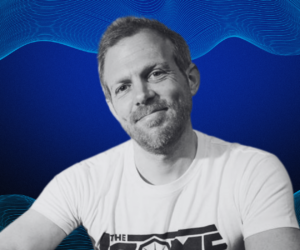
Greg Lombardo, Vice President of Experiences Creative & Production at Netflix, takes us inside the thinking behind Netflix House and the company’s growing slate of real-world experiences.
From Stranger Things to Bridgerton to Squid Game, Greg and his team are translating global hits into physical environments you can step into, through immersive worlds, live experiences, and themed dining. He shares how Netflix approaches experience design, what audiences are really looking for beyond the screen, and why these spaces are becoming a powerful extension of storytelling.
With a background spanning 20th Century Fox, Universal Studios, and BRC Imagination Arts, Greg brings a unique perspective on where entertainment, design, and culture are headed next.
Additional Links
- To learn more about Netflix House, visit their website.
- To get your copy of The Future of Storytelling, click here.
Transcript
CHARLIE MELCHER:
There’s a bittersweet feeling you get when the credits start to roll on a story you love. You know it’s coming to an end and you’re not quite ready to let it go. But what if that story didn’t have to end there? What if instead of saying goodbye, you could instead step inside it and keep it going alongside other fans? I’m Charlie Melcher. Welcome to the Future of StoryTelling Podcast. Today I’m exploring these questions in conversation with Greg Lombardo, Vice President of Experiences, Creative and Production at Netflix. Greg is leading some of the most ambitious experiments and immersive entertainment in the world, from global touring productions that have reached millions to the launch of two permanent Netflix House venues. Whether you’re attending a Queen’s Ball for Bridgerton or competing in high-stakes challenges inspired by Squid Games, these experiences are transforming passive viewers into active participants. In our conversation today, we talk about what it takes to translate beloved stories into real-world social experiences at scale. Please join me in welcoming Greg Lombardo to the FoST Podcast.
Greg, welcome to the Future StoryTelling Podcast. Thanks for being here.
GREG LOMBARDO:
Thanks for having me. It’s good to be back.
CHARLIE MELCHER:
So you have opened now two Netflix houses, one in Pennsylvania, one in Texas. Tell us what was the motivation for creating these permanent locations for immersive experience?
GREG LOMBARDO:
Yeah, so at the end of last year, we opened our Philadelphia location in November, and then we fast followed in December with our Dallas location. Netflix House is a place where fans can get all that rich variety of entertainment that they know at home, brought to them in new and innovative ways in real life, and also enjoy a really great dining experience, a never-changing retail experience. And it is a place that we want fans to come back to day in and day out throughout the year and year after year. And for that reason, a big part of Netflix House is the refreshable nature of everything that’s inside. So fans can always be assured that what they’re watching and enjoying on Netflix can be found in a real life way at Netflix House.
CHARLIE MELCHER:
This evolves out of a history that you have of doing immersive experiences that traveled, and you still have those as well. So you’re doing both traveling and location-based.
GREG LOMBARDO:
Yeah, we do. And I think it was a question of you have to walk before your run a little bit. When we first really started the line of business about six and a half years ago, there was really a question mark around how do we get after this space in a way that is uniquely Netflix. We thought about how can we get after these great stories that are on Netflix every day that fans really want to be a part of and experience in deeper ways in a way that allows us to go to where those fans are around the world. So that was the beginnings of the touring business. And we launched a variety of formats throughout the last several years, which have toured in cities around the world. So we’ve been in over 300 cities, over 11 million guests going through the door. That really provided us with a tremendous amount of insights into what our fans are looking for — How do we deliver it in a really quality way while also being able to operationalize a touring model, which is not without its challenges.
CHARLIE MELCHER:
I just want to take a moment and honor the scale at which you’ve already been operating. We champion immersive experiences, and some of them are for 15 people a showing. The scale that you’ve been able to operate, both in terms of the number of people through, the number of formats that you’ve been able to experiment with and the international scale. I mean, it’s just extraordinary. It really puts you at the top of the immersive experience hill. You guys are doing more in this than pretty much anybody else, short of maybe at Disney without full-time parks. So after all that incredible touring, you decided, okay, we’re going to set some stakes in the ground. We’re going to build two permanent venues and maybe more. So what’s the difference between — from Netflix’s strategic standpoint, from having touring shows versus having stable venues? How do you think about that differently?
GREG LOMBARDO:
The touring really informed Netflix House. We were leaning into this broad reach and touring model because we wanted to learn about the audiences and learn about not only what their tastes were like and how to deliver a great experience, but also define the footprint and the requirements of a venue that we needed to create a more friction-free touring model in essence. Because the venue at Netflix House, at the heart of it, are these soundstages that are really informed everything from the square footage of those soundstages to the infrastructure of those soundstages, the equipment that’s in them. All of that has been informed by the touring portfolio that’s been out there, but it expands, really, to every corner of Netflix House. We did a Netflix Bites pop up in LA as our first foray. And I think the question there was, “Hey, do we have license to play in the food and beverage space?” And I think if you look at the incredible breadth of food titles that are on Netflix and the incredible talent that is represented across those titles, we really learned a lot by doing Netflix Bites. And so all of these touring exercises really were muscle building for what this venue would be. And I think where you get into the incredible benefits of the venue is that ability to change it out and that ability to control the venue in a way that you can’t otherwise do when you’re just on the road.
CHARLIE MELCHER:
And so for our listeners, let me make sure everyone understands. Whereas before you had to go into whatever space you could get or you’d find one and you’d have to adapt your show to fit into this unique venue, now you’ve standardized your venue. So these sound stages are of an optimal shape and size, and so they stay where they are. There’s two in each of the Netflix houses, but you can now rotate your shows between the various houses.
GREG LOMBARDO:
That’s right. I mean, the biggest challenge for us is because of the amount of stories that we’re creating from around the world. Keeping up and moving at the speed of that content is so important for us in the location-based space. And so I think for us now, again, it just relieves that friction. And then as you think about the venue beyond those soundstages, from a restaurant perspective, you can also now change out the menu items. You can change out dishes that keep up with the content. You can introduce a retail program around a title during a launch that you couldn’t otherwise do. In Philadelphia, we built our version of a mini golf course called Top Nine, where every hole tells a story, and we also have free roam VR offering there. And these story rooms where you get to have a 10-minute long immersive experience with smaller groups of six to eight people. All of these elements allow us to just offer a greater variety of stories for our fans to get closer to at the end of the day.
CHARLIE MELCHER:
And a lot of people think about your commitment to immersive experience as marketing — that you’re doing it to continue to keep fans engaged with the property. Sometimes the series, you’re between new episodes and you want to keep the community engaged. And if it’s marketing, does it have a different financial incentive? Are you looking at the bottom line the same way somebody who’s had to raise some money to put on a show?
GREG LOMBARDO:
Look, I think all great experiential entertainment at least does some marketing. It has to. I would imagine that Disney understands the brand value of a park and how you’re bringing those titles to life day in and day out for fans. And I think it’s no different for us. I mean, it’s important for us to stay relevant to our fans, and that relevance comes from giving them the stories they love. So if you’re a fan of Stranger Things, you don’t want to wait a couple of years until the next season comes out. And I think that a big part of this is in service to the fan and allowing them to get one step closer to that story they love, to have their hero moment with that story. And that’s what these experiences allow us to do.
CHARLIE MELCHER:
And I think it’s an important distinction because you’re not just providing new episodes or new storylines. You’re providing an opportunity for people to be able to step into the world. In my book, The Future of Storytelling, I celebrate Netflix, but I love the one example where you came up with this very simple thing for a Queen’s Ball. You were kind enough to invite me to one of the first nights and everyone came dressed absolutely in period, except for me. I stood out like a sore thumb, but ±
GREG LOMBARDO:
Well, you had a good excuse. You were not aware of the level of fandom, I think.
CHARLIE MELCHER:
I was not at home where I have my normal costumes, but I remember watching people queue up to be able to be presented to the queen. And she was on some throne or couch and she was non-plussed as the queen is. But each of these people would be brought forward and you’d watch them do these elaborate curtsies. I mean, really, they were almost like Olympic gymnastics. People were bringing every ounce of their own creativity and self-expression to this gesture of being able to subjugate themselves to her highness. The value to the guest was so powerful because they were getting to feel what it was like, and they were getting to have a kind of language to the body. Those feelings were tied to the physical gesture of a bow. And I just thought, this is genius. It’s simple and powerful.
GREG LOMBARDO:
Yeah, thank you. No, and I think Bridgerton is such a remarkable title in that it has re-imagined Regency London and in a very palpable, modern, contemporary way. So there’s that sense of credibility. You’re sort of bestowing on the guest at that point, right? You’re giving them now the agency to embellish their role in that world. It’s purely about wish fulfillment at that point.
CHARLIE MELCHER:
Well, and also the dancing. You had these wonderful moments where everyone’s being taught a dance and everyone’s participating in the dance and a nice seamless float between narrative elements with actors and interactive moments where we’ve got to be the supporting cast. You’ve done a beautiful job of recreating the world with great detail so that it feels authentic and real. And of course, you have the access to the teams that make the shows. So if anybody’s going to be able to recreate them, you can do it.
GREG LOMBARDO:
It is so important in the process to have that involvement and collaboration with the show creators to ensure that we’re delivering the voice of the show in the real world. And I think it’s also, when you talk about something like The Queen’s Ball or Stranger Things or now Squid Game, it’s not a one size fits all. I think the thing I’m most proud about what the team has done is really try to look closely and deliberately at how to bring these very unique and very different titles to life for fans because what works for one title will most definitely not work for another one. Squid Game is very gamified. It’s all about competing and scoring and trying to be the winner. Totally different than the format of Stranger Things or the format of Bridgerton.
CHARLIE MELCHER:
And what’s so special is that you’re helping to create the templates or the experimentation about how you translate two-dimensional linear narratives into three-dimensional and four-dimensional experiences where the guests go from being passive TV watchers to being active participants in these worlds in different ways. That I think is at the heart of what’s happening in the shift in the 21st century is from passive, two-dimensional, linear, fixed, unresponsive, and sometimes frankly, anti-social media to a world and you get to decide what’s going to happen or get to co-create it in a way. That is a wildly different shift that’s taking place. It’s much more human. It involved not just our senses, but our creativity and our personalities and our need for interaction with others and all those things that really got stripped out when we went from an oral culture to a literary one, to a digital one, to one that’s operating with their thumbs on a little screen. This is not how we evolved over millions of years in nature to interact and you’re helping to create the kinds of stories that now we can live. I like to refer them as living stories, but in doing so, they’re more human. They’re more how we’re supposed to interact with each other. We can literally start to play these stories together.
GREG LOMBARDO:
People also want to share an experience. The notion of a shared experience around a story you love, I always feel like that’s the layer we bring to it, hopefully if we do it right. It’s the chance to join hands with a fellow fan and have that moment together. It’s really rewarding to see it when you get it right.
CHARLIE MELCHER:
Now let’s talk about it a little bit from an economic standpoint, because some of these things are expensive to build, to do that level of set design and interaction design and story development, and you have actors and music and lighting. Are these things making money or are you just having to subsidize them?
GREG LOMBARDO:
Revenue’s a part of it, but at the end of the day, I’ve never seen a revenue model that works where you weren’t delivering on the first thing, where you weren’t obsessing over the quality of what you’re bringing to life and how your fans feel about it. We obviously are looking at the attendance. Are we selling out? But at the same time, it’s one thing to sell a ticket. It’s another thing to get someone to talk in a great positive way about the experience and tell others. And I think for us, it’s why at the end of the day, our biggest KPI is always going to be guest satisfaction. Everything else kind of spills out from there. And so we’ve always really hyper-focused on can we deliver a consistently great, creatively excellent experience because that’s really where the challenge lies.
CHARLIE MELCHER:
I remember Felix Barrett from Punchdrunk — there’s a quote that I’m going to mess up that’s in my book that — he said, I’m so excited when somebody has left a Punchdrunk experience and they don’t say the next day, “You won’t believe what I saw.” They say, “You won’t believe what happened to me.”
GREG LOMBARDO:
Ah, I love it.
CHARLIE MELCHER:
It shows that there’s a much greater level of engagement when it happens to you versus when it’s something you flipped through or saw. I mean, I’ve been to both your experiences and Felix’s experiences, and I tell the stories over and over and over again. That’s what you want, and that’s so different than the way a lot of marketers count.
GREG LOMBARDO:
I mean, I think at the end of the day, it’s do you make someone feel good? Was there a visceral scare in there that they’re going to tell their friends about like a jump scare in Stranger Things? And again, that feeling is very different than Squid Game, where people will tell you when they watch that series, “Ah, I think I could do better at that challenge. Here’s what I would do.” They start to strategize and sort of tell you their theories on how they would survive that challenge. Great, let’s give people that wish fulfillment in a safe environment where they can live out that opportunity and literally see how they do against others in the room.
CHARLIE MELCHER:
Now, you have a lot of experience, Greg, in helping to take IP and bring it into all different kinds of formats, not just like immersive, but I know you’ve done Broadway, you’ve worked in other fields. Can you talk a little bit about how popular IP kind of wants to live outside of its original TV format?
GREG LOMBARDO:
I just think that good stories will find a way to grow tendrils into every aspect of your life. And whether that shows up in what you’re wearing and you’re kind of showing that pride in that story in a piece of merchandise or by going to a play or an immersive experience, we have tried to explore a variety of formats. And the Stranger Things: First Shadow play was a big swing. And Stranger Things is one of those titles where there’s so many directions you can go when you start to think about an experience. And in the case of The First Shadow, it was a chance to go back and do a prequel of sorts. Talk about an experience that could not have been done without deep, deep, deep collaboration and the involvement of the creators of that show, the Duffer Brothers and Kate Trefry. And we had such monumental support from them to make that happen. And then to see it take shape and become relevant in a fan’s mind over time.
CHARLIE MELCHER:
And the show was very successful, the Broadway show or theater show, right?
GREG LOMBARDO:
Yeah. Opened on the West End. We’re fortunate enough to just get tremendous reviews and be very embraced by the London audiences. And then we moved it to Broadway. Both are still up and running, five Tony Awards on Broadway.
CHARLIE MELCHER:
It’s such a rich world and so deeply thought through. And I’m curious about your thoughts on what kind of IP lends itself well for immersive experience. And does it need to be an established IP? You’re very lucky to get to know when you have a hit already on Netflix and then be able to translate it, but are some better than others?
GREG LOMBARDO:
I think obviously the stakes, high stakes always works well in experiences, whether it’s, will I be the diamond of the season and will I find love and will I find my happy ending or will I make it out alive? I mean, these are all the things that always play very well. The most fun part about doing all of this at Netflix is I don’t know if we’ve necessarily tackled the usual suspects in this space. I mean, I think if you look at something like Bridgerton or Squid Game, these are titles that maybe wouldn’t have a life in this space outside of an environment like Netflix where we could have that level of fandom, that incredible global fandom that’s just built in.
CHARLIE MELCHER:
This comes up a lot because I see and meet a lot of people creating immersive experiences. I’m very fortunate that way. And there’s often this struggle between, should I start this with a known IP? Maybe I’ll license it. Or do I go to something that is self-created? And then the question of what scale? Because I see these different levels of immersive production. You have sometimes something very simple like, let’s just create the living room from friends and all there is, is the set. Basically you’re just going to go sit in the couch and then you go all the way at the other end to something like Galactic Star Cruiser where they went insanely all out and built an entire starship and a hotel experience and a million pieces of tech and a huge cast. And you guys are somewhere in the middle there between those two poles. Do you have a sense about how far to invest and how elaborate to go?
GREG LOMBARDO:
Well, look, I mean, that’s the question. That is the question that we’re always triangulating around answering. But I think for us, look, scale is very important because of just the reach of Netflix around the world as a delivery of storytelling. We really obsess over how do we bring this to as many as possible? You don’t want to leave fans wanting. You don’t want to leave fans waiting and waiting waiting for it to come to them. So you have to think about it creatively, you have to think about it operationally, you have to consider all those things. And I think in the beginning, what really mattered about all of those early experiences that we created was it allowed us to learn the hard way too along the way. We didn’t get everything right, but we were able to figure out, okay, what is a right size generally for these things?
Where’s the best place to direct resources? What part of the story matters most to the fan? Creating a right-sized organization around that to be able to tackle it and get after it and be able to manifest these ideas in a way that are going to be, again, delivered day in and day out at that high level of quality. That was invaluable to us in those early days. Yeah, the scale is key.
CHARLIE MELCHER:
So that leads to another question. To what degree is technology actually enabling you to create better immersive experiences at lower cost? Are we getting there? Is that helping?
GREG LOMBARDO:
We’re finding some amazing tech out there and some amazing partners. You’re always trying to deploy it in a way where it serves the story and doesn’t become the story. Really, the best tech is it sits invisibly in there and empowers you in a way that you can’t put your finger on. If I look at what we were able to achieve with the liminal technology that we deployed in the first Stranger Things experience where there is 3D LED with a real high degree of fidelity where we were able to put a live actor in that space alongside media of actors from the shows and creatures from the shows and have seamless interaction between the two — up until then, you would’ve only really seen that deployed to the theme park because it wouldn’t have been possible, one, to even achieve that without a theme park infrastructure, but it would’ve been impossible to tour it.
CHARLIE MELCHER:
And then your intention is that you can travel it to other Netflix Houses and then also maybe on the road. Is that right?
GREG LOMBARDO:
That’s right. As we evolve and build on the Netflix House concept that more and more of it would happen within that ecosystem. But for now, with two Netflix Houses online and one in development in Las Vegas, there’s still a tremendous need to continue to meet those audiences where they are around the world and tour these experiences that we’re building. We’re just building them now specifically with an eye towards the Netflix House soundstage.
CHARLIE MELCHER:
Look, I’m so hopeful that this is really successful for you and provides some of the standardization that immersive experience in its early years has not been able to find where everyone’s been experimenting with different sizes and shapes. So I’m hoping that you’re starting to provide a template maybe that could become a little more standardized. And then perhaps creators could be creating things that maybe even someday would come to Netflix House that weren’t based on a Netflix title. Just it’s a great immersive experience and they can fit in your soundstage or like movie theaters.
GREG LOMBARDO:
That’s right. Yeah. And look, we’ve learned a tremendous amount from others as well. If you see a format that’s really great and then you think, okay, how could we kind of meld that with this format, and there’s a lot of that type of iteration and innovation that happens on a daily basis. And I think that for us, you want all these things to work. I’m a huge fan of the space. I’m a huge fan of experiential, and I love going out and seeing these things, and you want them all to succeed. It can be a difficult space because of the question of scale and other things.
CHARLIE MELCHER:
I appreciate that. Greg, you’ve been so good at creating these meaningful stories for millions of fans who love the worlds that you’re working with, but that you’ve really been able to lift it out of the screen and make it something so powerful and meaningful to people because they get to live in it, because they get to fulfill those wishes, those desires, their dreams of being in those worlds. And I just couldn’t be more appreciative for the contribution that you and Netflix — and by the way, I do want to give a lot of credit to the company. I mean, it’s risky. It’s taken real investment, there’s been, I’m sure, a lot of hard learned lessons, and yet you continue to innovate and push the boundaries of what’s possible and to do it at scale. So I just want to congratulate you and thank you and wish you great success and can’t wait to be in the next story of yours.
GREG LOMBARDO:
I really appreciate it. And I got to give a huge shout out to the incredibly talented team here in the experiences team and cross-functional partners across the company who really do the heavy lifting, but also very grateful for you, Charlie. You’re such a great ambassador for this space. You’re everywhere and you’re so respected, so I appreciate our chats.
CHARLIE MELCHER:
Once again, I’m Charlie Melcher, and this has been The FoST Podcast. Thank you to Greg Lombardo for joining me today. If you enjoyed this episode, please check out my new book entitled, The Future of Storytelling: How Immersive Experiences Are Transforming Our World. It’s available in stores and online wherever books are sold. And if you’re feeling inspired and want to expand your knowledge of cutting-edge storytelling, please consider joining the FoST Explorers Club. It’s a global membership-based community that brings together creative leaders for speaker sessions, curated trips, and much more. FoST podcast is produced by Melcher Media in collaboration with our talented production partners, Charts & Leisure. I hope to see you again soon for another deep dive into the world of storytelling. Until then, please be safe, stay strong, and story on.